
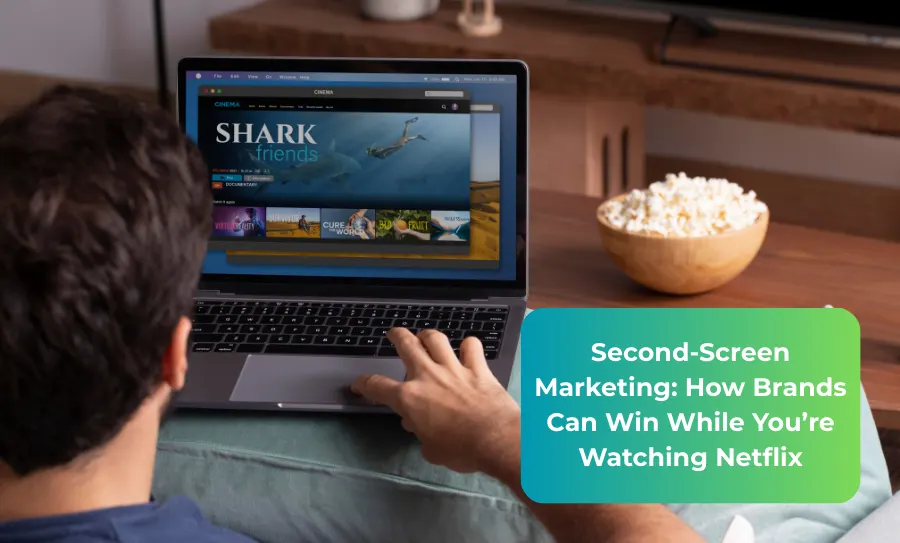
Second-Screen Marketing: How Brands Can Win While You’re Watching Netflix
Introduction
You’ve got Netflix on the TV, but your phone in your hand. Sound familiar? You’re not alone. Studies show that over 70% of viewers multitask on a second screen while streaming.
For brands, this isn’t a distraction—it’s an opportunity. Second-screen marketing taps into this behavior, allowing companies to reach consumers while their attention is split between entertainment and devices.
What is Second-Screen Marketing?
Second-screen marketing refers to strategies that target users who engage with two screens simultaneously—usually a TV and a smartphone.
Instead of fighting distraction, it leverages it: syncing brand messages, campaigns, and interactions across platforms to create a seamless experience.
Why Second-Screen Marketing Matters
1. Attention is Fragmented
Streaming platforms hold eyes, but phones hold hands. Winning both screens increases engagement opportunities.
2. Social Conversations Happen in Real Time
Viewers live-tweet, post memes, or Google actors mid-show. Brands that join these conversations ride the wave of trending content.
3. Shopping Happens Mid-Stream
Product searches often spike while people watch. A triggered ad or shoppable post can convert in the moment.
4. It Bridges Entertainment & Commerce
Second-screen strategies turn passive viewing into interactive brand experiences.
How Brands Can Win with Second-Screen Marketing
Sync with Live & Streaming Events
Run ads or posts tied to trending shows, sports, or cultural moments. Example: Oreo’s “Dunk in the Dark” tweet during the Super Bowl.
Leverage Social Media Reactivity
Use hashtags, polls, or memes to join real-time show conversations. Authentic engagement matters more than forced promotion.
Make Ads Shoppable
Clickable QR codes, Instagram Shop integrations, or TikTok product tags bridge entertainment to instant purchase.
Use Contextual Targeting
Programmatic ads can target viewers who are likely watching a certain show genre, syncing second-screen content with primary-screen context.
Gamify Engagement
Offer trivia, quizzes, or interactive challenges that run alongside popular shows—encouraging users to stay connected with your brand while watching.
Examples of Second-Screen Success
- Twitter & Reality TV: Reality show hashtags drive massive conversation spikes, creating opportunities for brand sponsorships.
- Amazon Prime x Mobile Ads: Integrated product placement with clickable mobile ads allows instant purchases.
- Red Bull Esports: Engages gaming audiences with live polls, chats, and interactive second-screen content during streams.
Conclusion
Second-screen marketing turns distraction into opportunity. By syncing with cultural moments, social conversations, and mobile shopping behaviors, brands can engage audiences where their attention truly lives—across two screens.
At Etherfly Services, we help brands craft cross-screen marketing strategies that boost visibility and conversions without interrupting the entertainment experience.
Ready to win attention in the age of multitasking? Contact Etherfly Services today.
Leave a Reply